Project at a glance
1. A project that began with a love of arcades
I regularly visit arcades.
My home arcades were Smile Arcade in Cheonan, known as a rhythm game destination in the Chungnam region, Sambo Game Land in Seomyeon, Busan, and GameD near Kyungsung University.
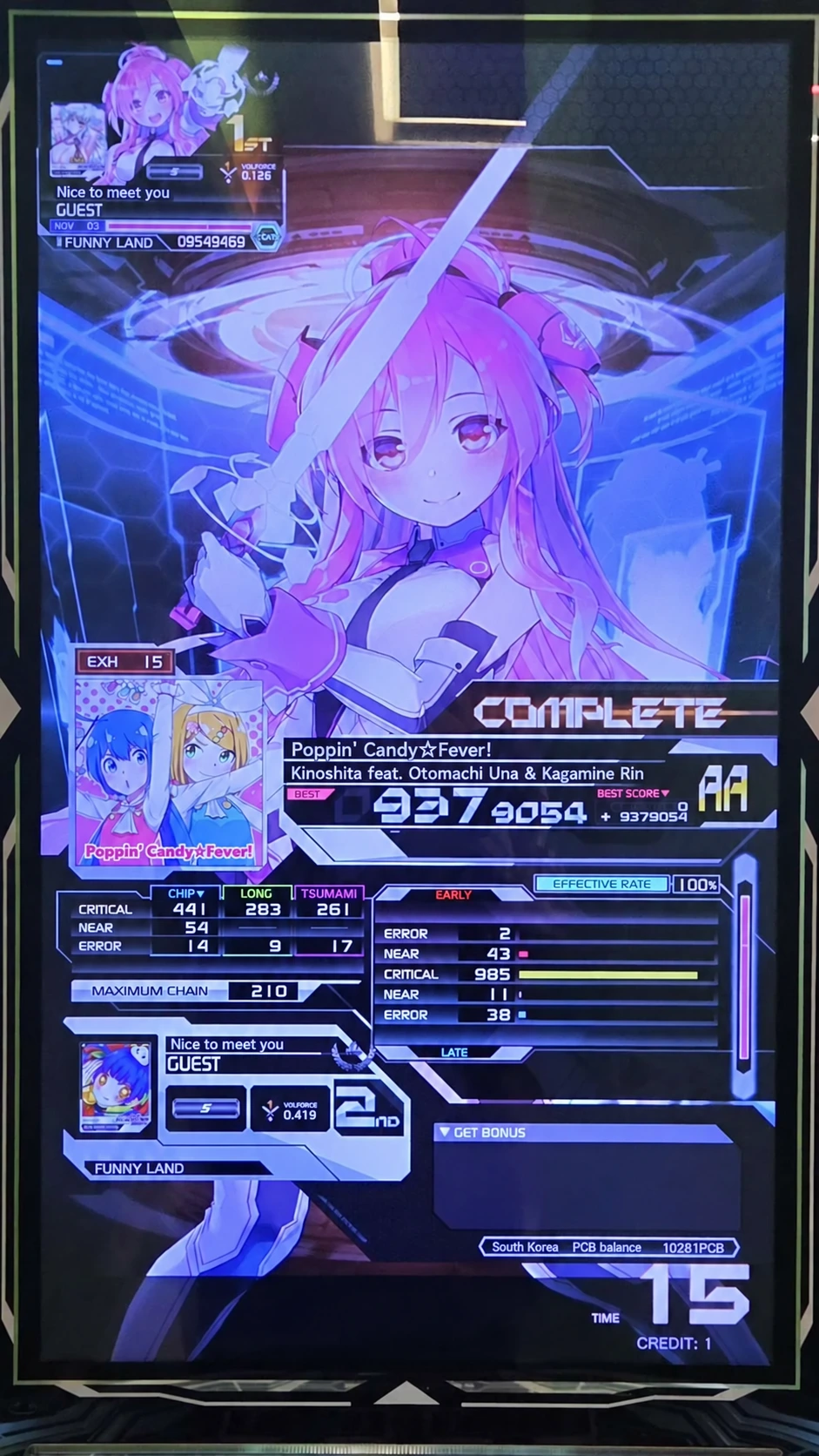
I had also been playing SOUND VOLTEX casually with a friend for the past two years, but began playing more seriously in March this year.
I still vividly remember playing SOUND VOLTEX with a friend for the first time at Gametopia in Hongdae. At the time, simply clearing a level 15 song made me very happy, and I wanted to keep playing.
As my interest in arcades and rhythm games grew, I naturally began to think about putting my design skills to use in this field as well.
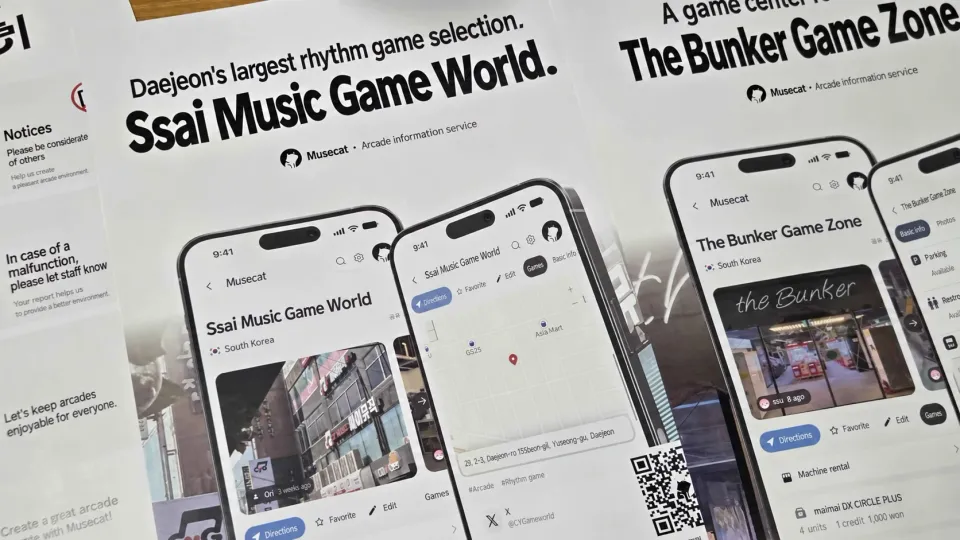
I later joined Musecat, the arcade information service, as a designer, and wanted to put into action a poster project that Eric, Heart, and Bluescreen had previously planned.
However, with my military enlistment approaching, I did not have much time left to work on it. I therefore decided to fit poster deliveries into my personal outings during an already-planned trip to Seoul.
Choosing arcades and arranging the schedule
First, I prioritized the arcades and selected places to visit that would fit my route and personal schedule as closely as possible.
I already had a personal trip to Daejeon planned, so I wanted to visit The Bunker Game Zone and Ssai Music Game Land, two well-known rhythm game arcades there.
In Seoul, my candidates were Hanyang Game Center, Arcade Vision, and Uri Arcade near Hansung University. In Gyeonggi Province, they were Jinju Game Land in Guri, Signal Game Zone in Suwon, P2 Zone and Attack in Bucheon, and Game Heaven in Beomgye, Anyang.
The plan was to finish by visiting Smile Arcade in Cheonan, one of my home arcades.
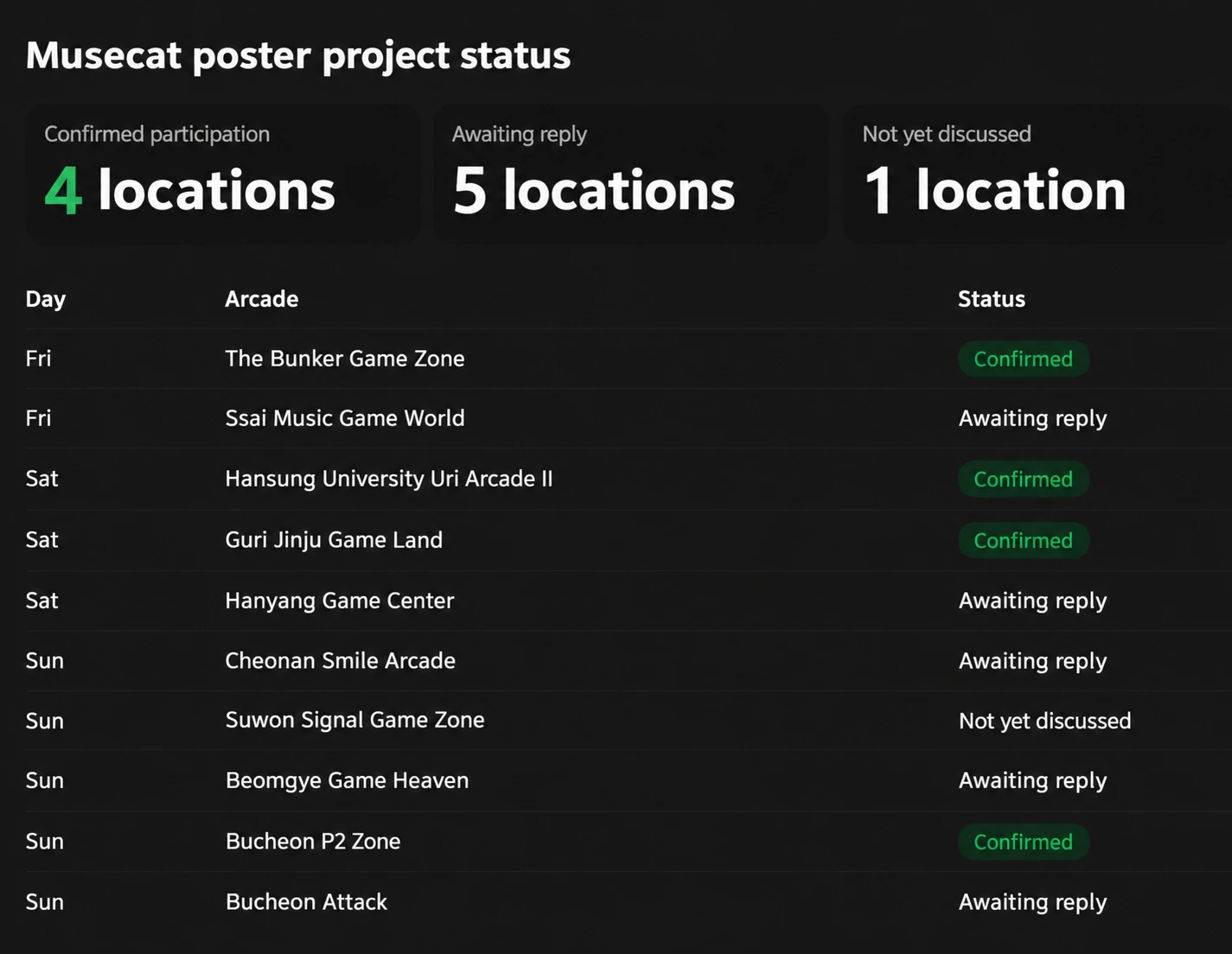
I was not sure I could visit every arcade, but wanted to deliver posters to as many venues as possible within the time available.
2. Designs that reflect each arcade's own story
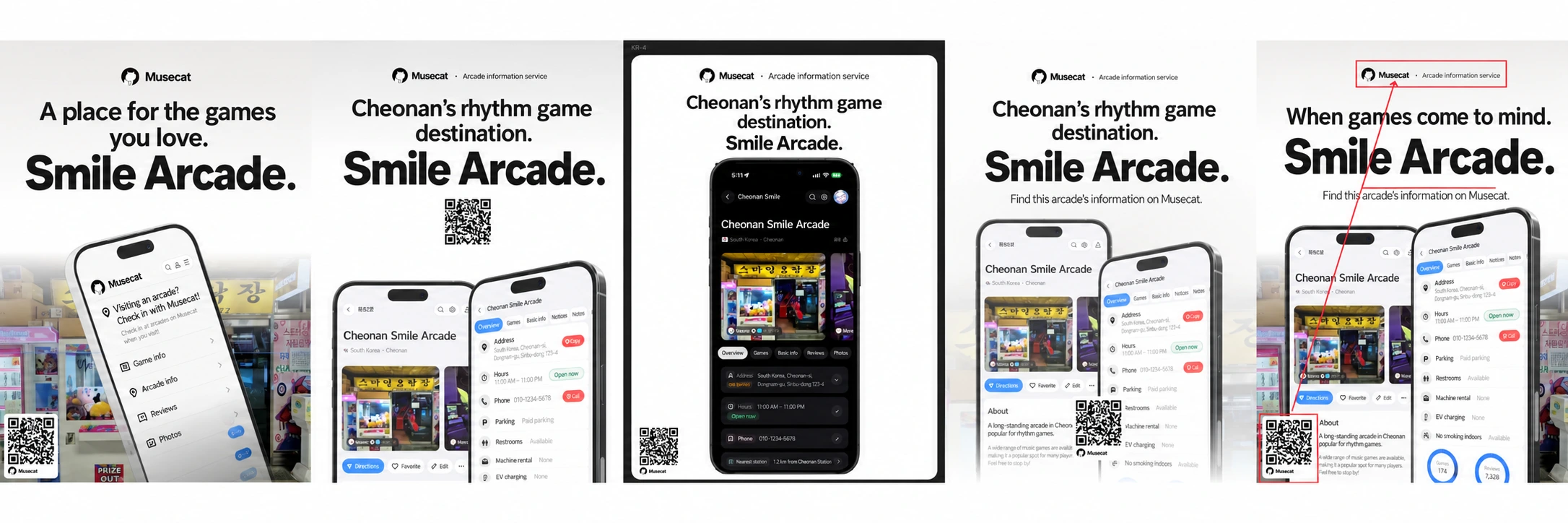
Before starting production, I worked on several poster designs.
What mattered most to me was making the design easy to understand, even for people seeing Musecat for the first time.
At the same time, I wanted the posters to do more than promote Musecat: they should also be useful to the arcades where they would be displayed.
Rather than using a uniform message such as “At ○○ Arcade? Check in!”, I therefore wanted to create posters with wording that reflected each arcade's character and distinctive features as much as possible.
Every arcade has a different atmosphere and its own characteristics, and I wanted those differences to come through naturally in the posters.
The other materials prepared alongside the posters
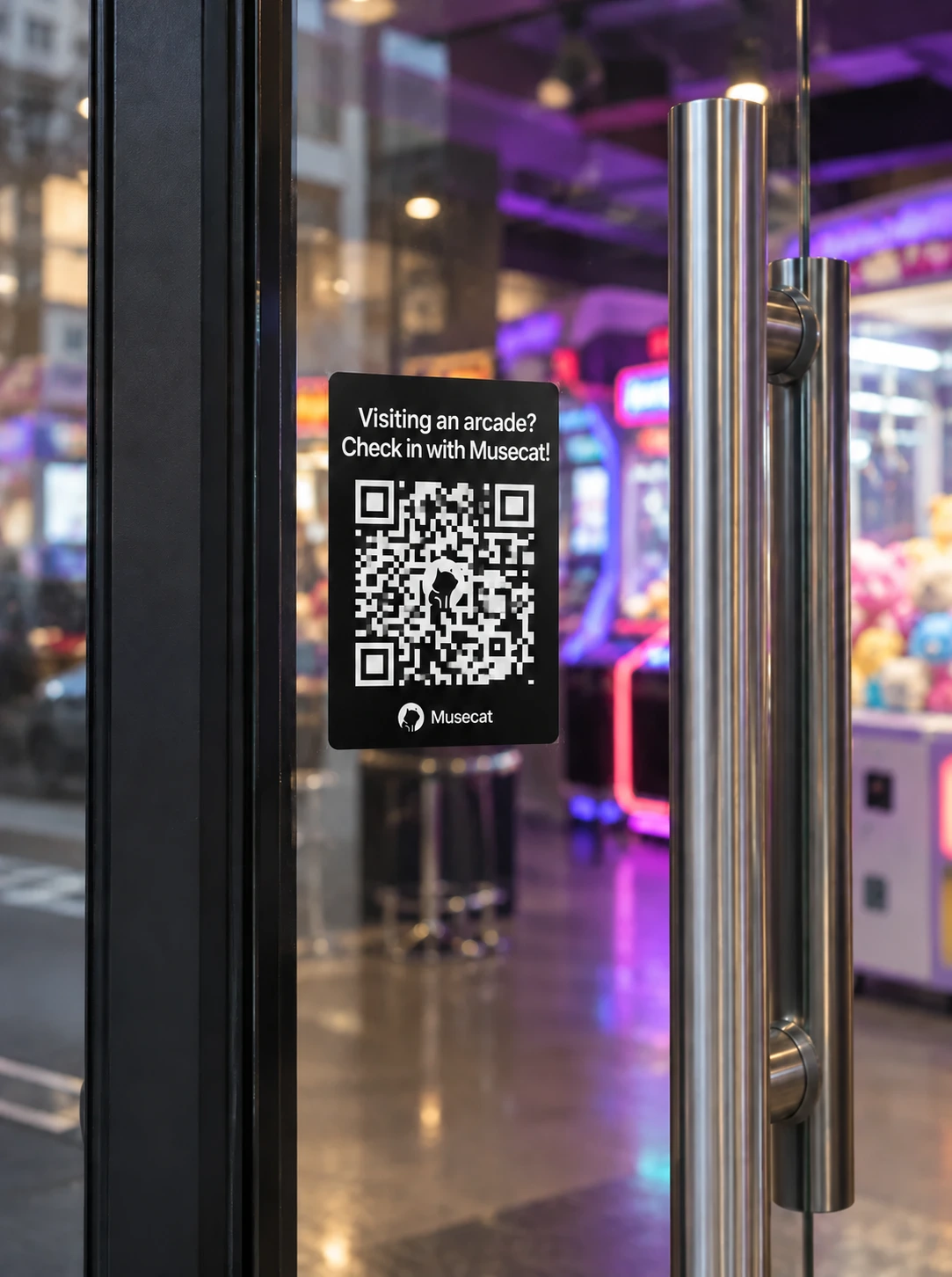
In addition to promotional posters for each venue, I also designed arcade etiquette posters and QR code signs for checking in.
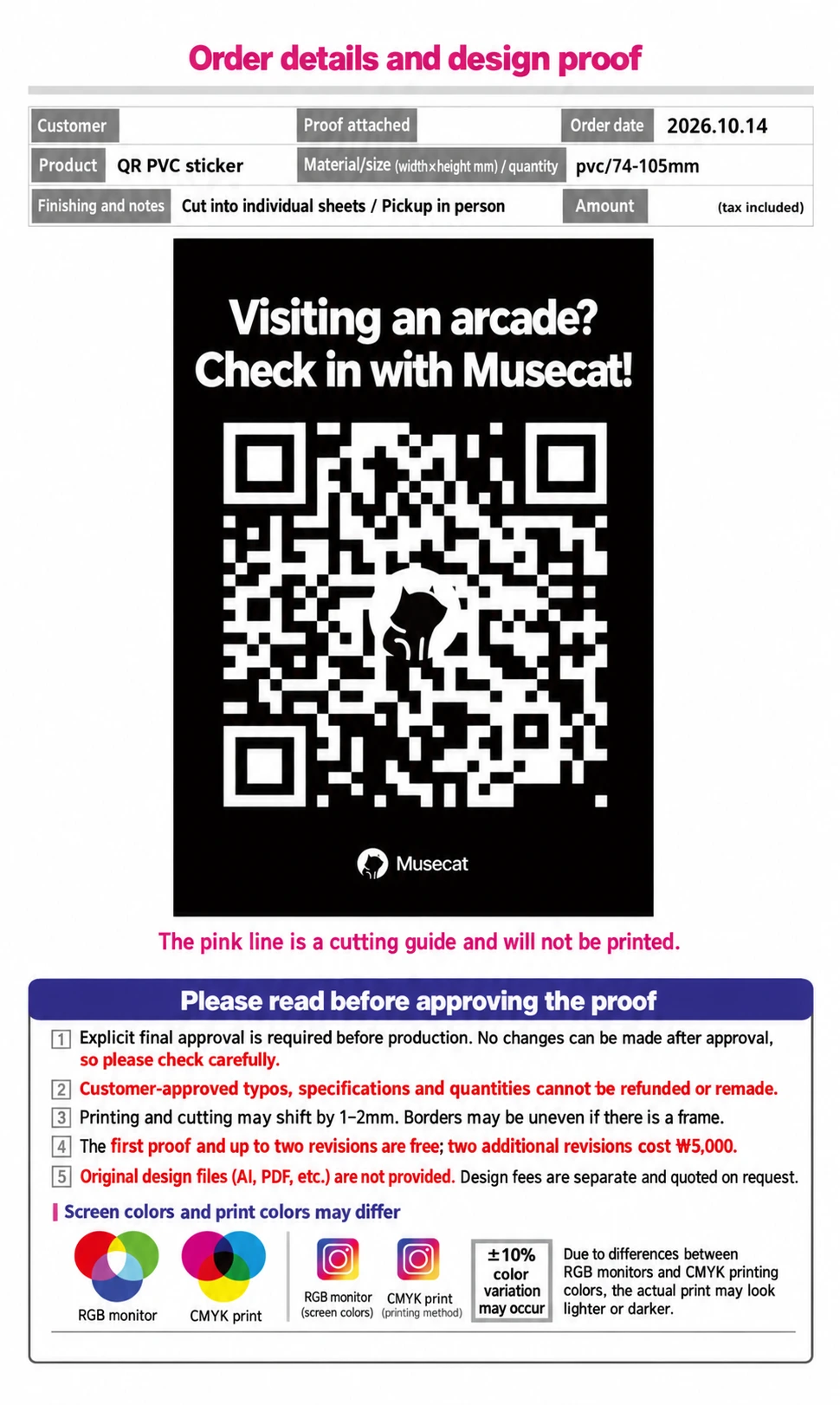
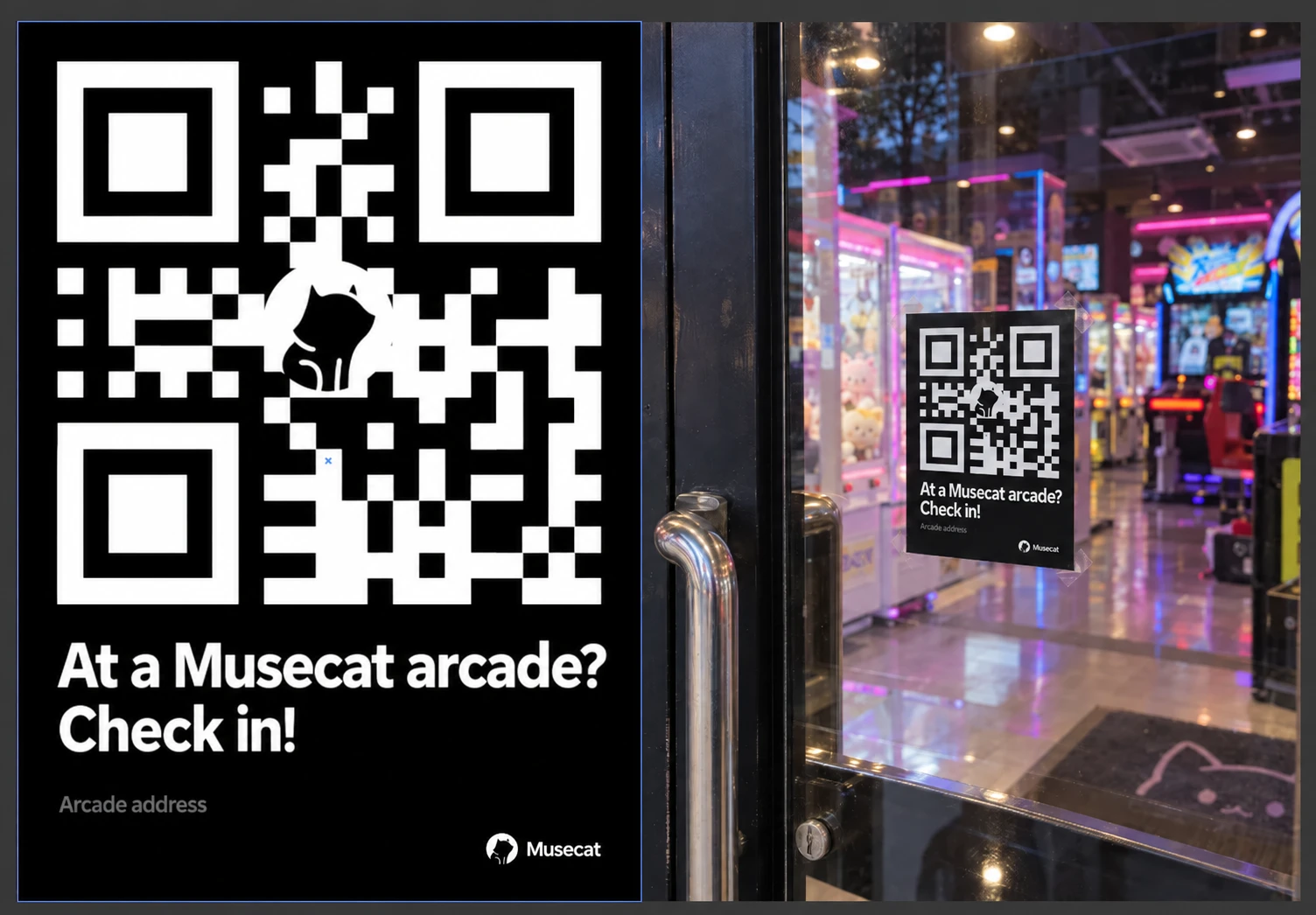
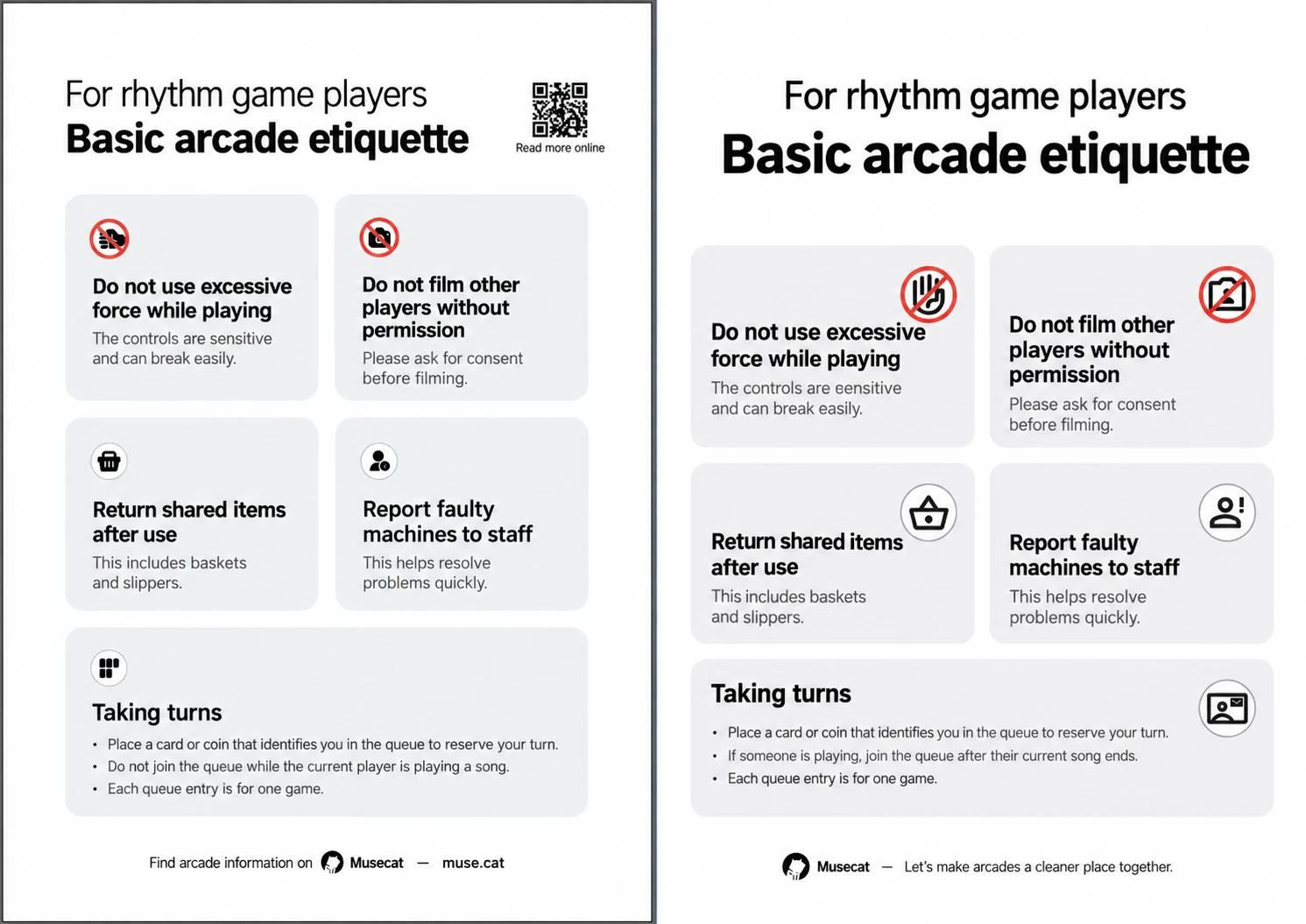
The original idea for the QR code signs was to give each arcade its own wording and QR code, reflecting the individuality and character of each venue.
In the end, however, I decided to use one shared design for visual consistency and production efficiency. I printed multiple copies of that design and planned to distribute about two to each arcade.
I hoped this would help promote Musecat while also providing useful information to arcade visitors and practical benefits to the venues.
Deciding where to place the QR code
One thing I thought carefully about during the design process was where to place the QR code.
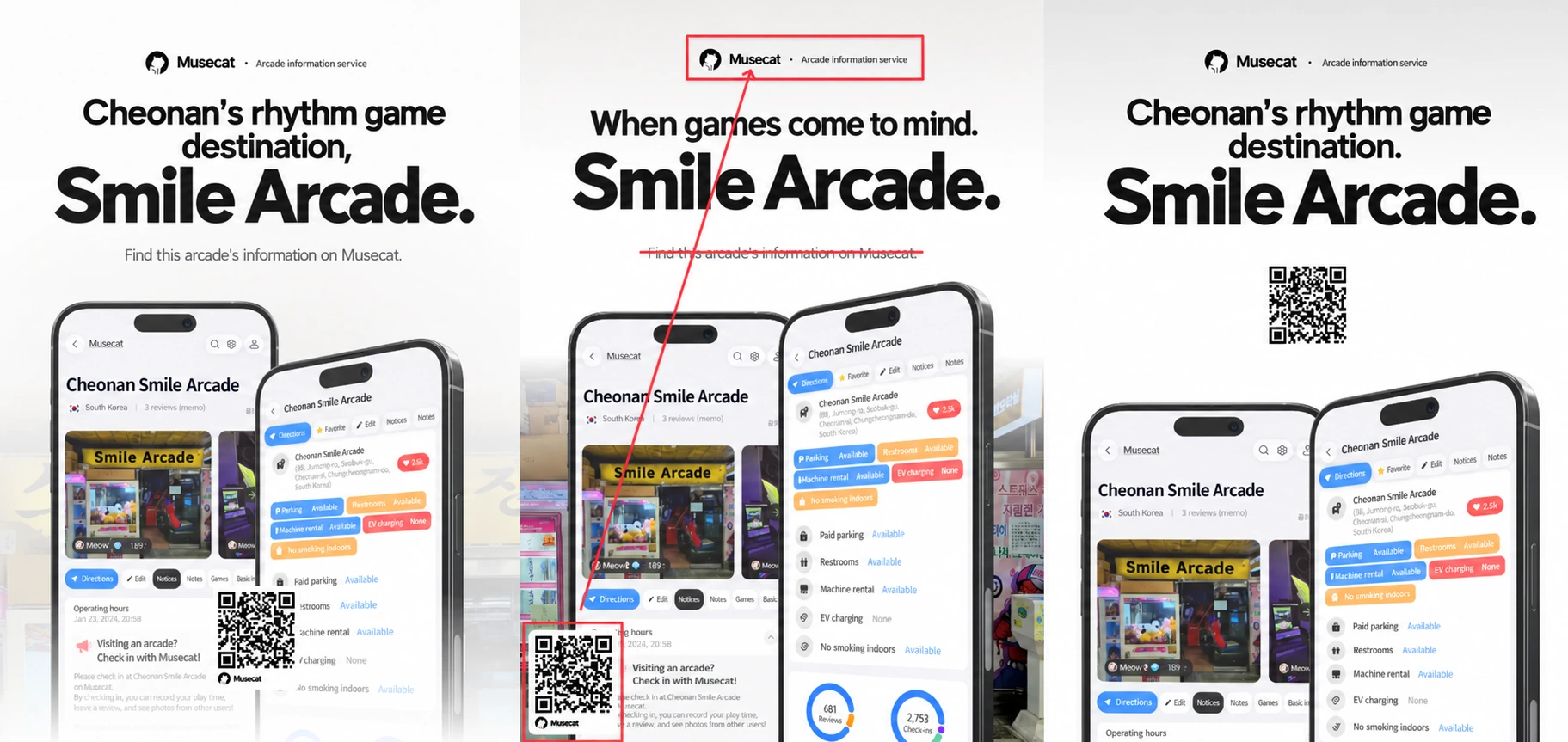
I tried several layouts, including putting it in the center of the poster. After considering the overall layout and readability, I ultimately decided to place it at the bottom right.
3. Turning on-screen designs into printed materials
The poster project was not organized as a centralized print and distribution effort by the Musecat Team.
The promotional designs would be made available online, while individual participants would handle physical printing and distribution at their own discretion.
Since I was responsible for the poster designs, I personally prepared everything from printing and collection to delivery at each arcade.
There was only about a week left before the planned visits, so I needed the printing done quickly.
I searched online for print shops and ultimately used one near Dongseo University in Busan and another near Busanjin Elementary School.
Both shops were very helpful, and I was also very satisfied with the quality of the printed materials.
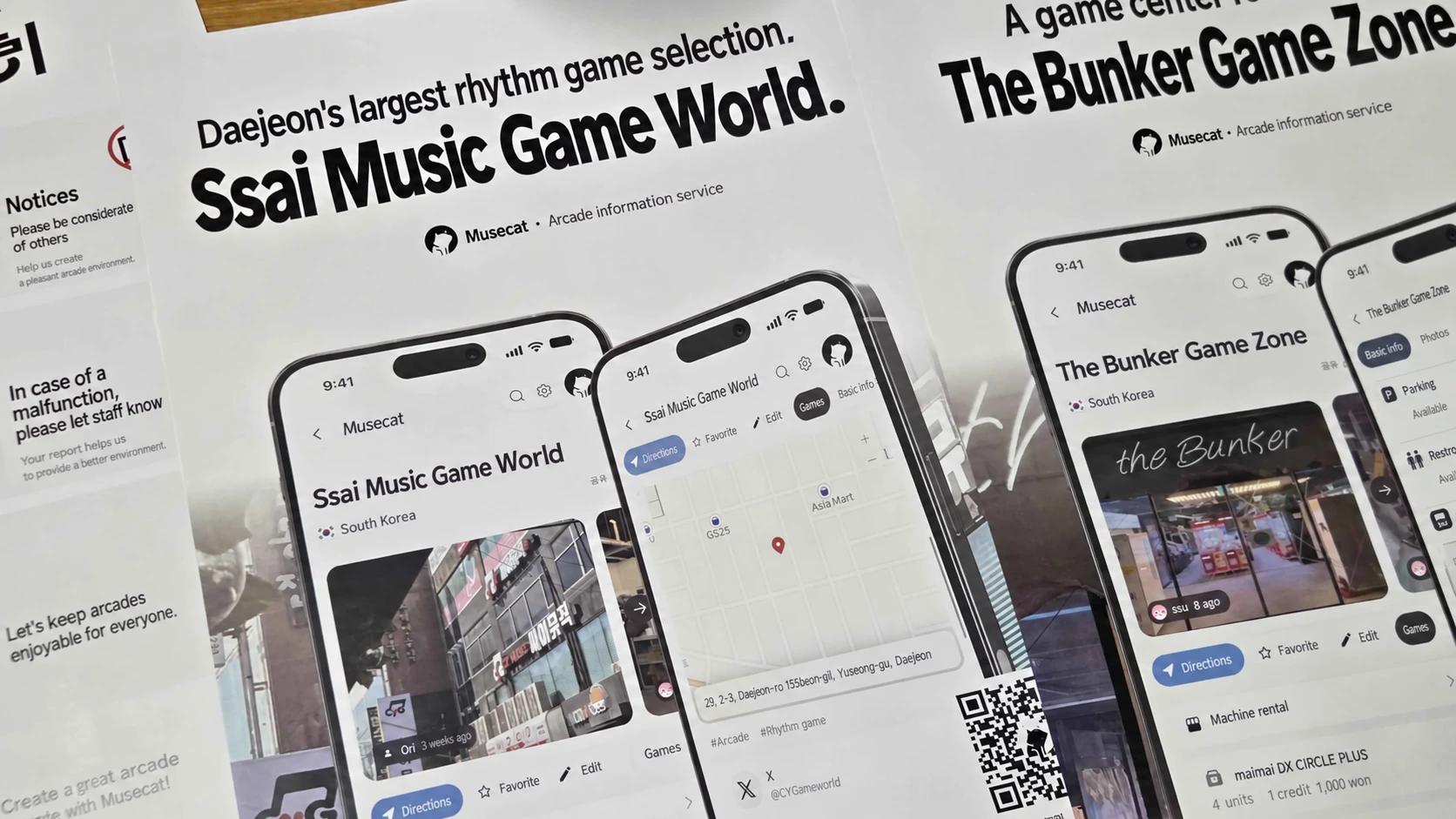
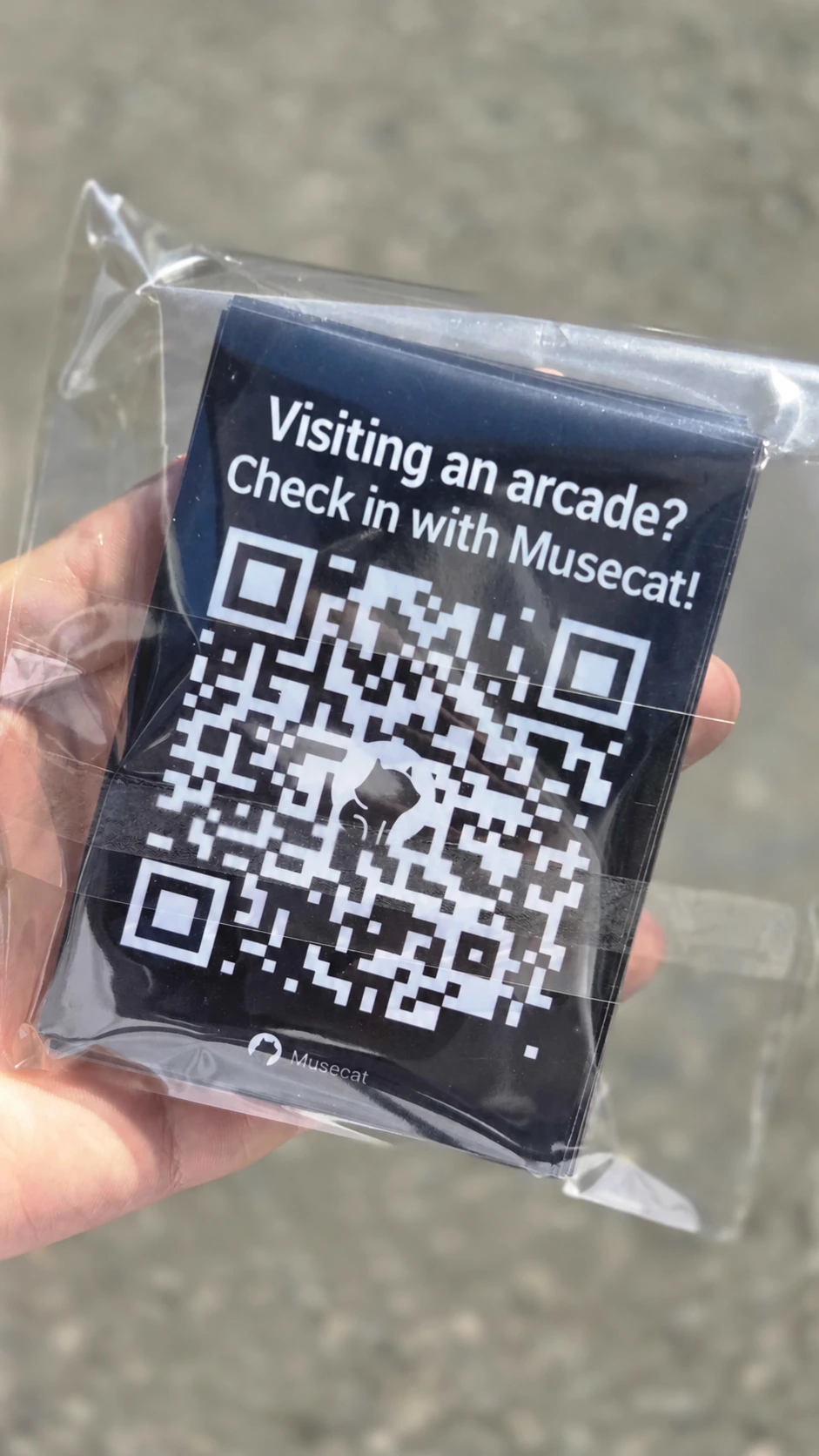
I chose A3 for the posters and A7 for the QR code stickers.
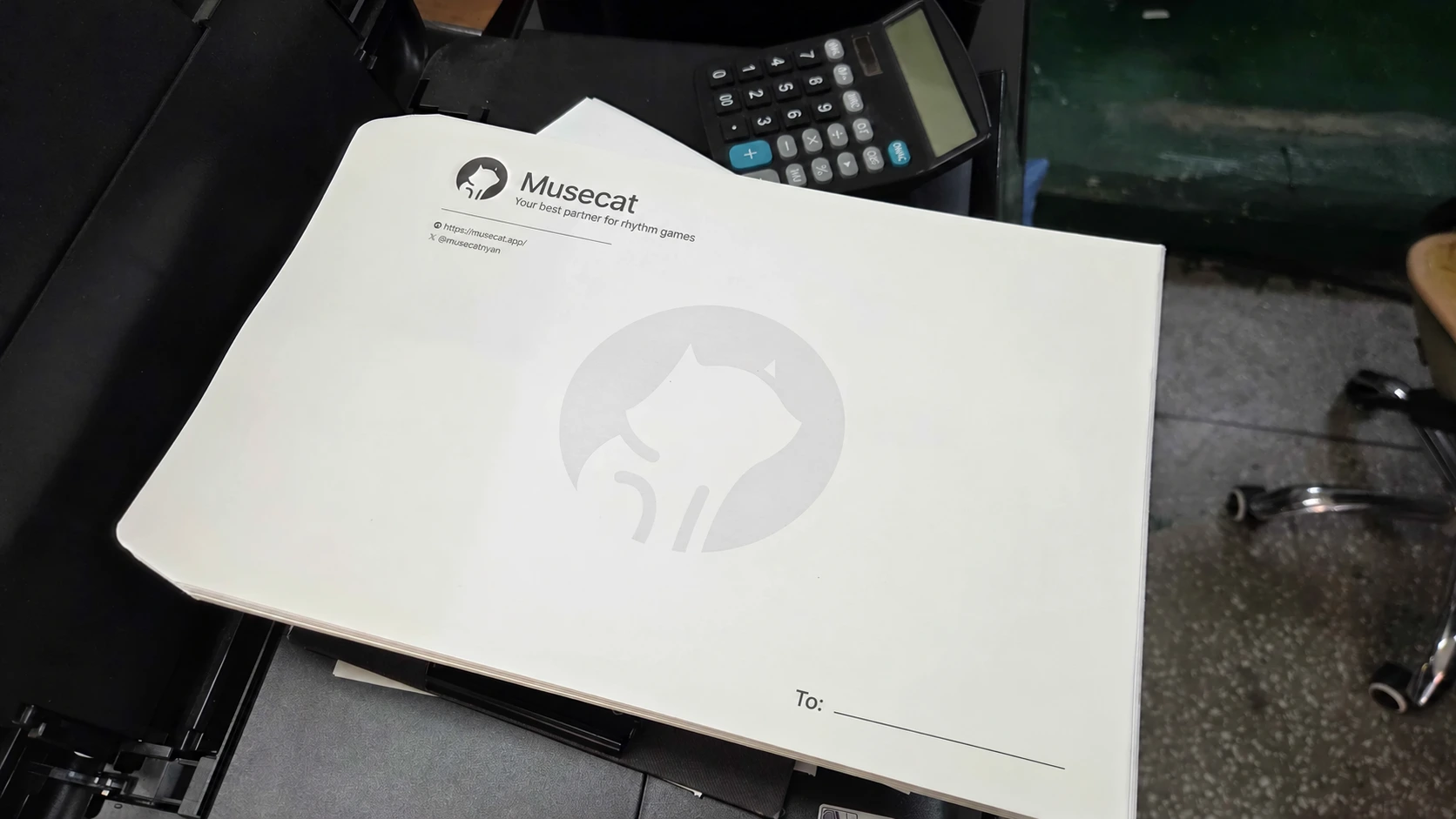
I also prepared official letters to give to the owners and staff at each arcade.
The letters were printed on A4 paper, and I designed custom Musecat envelopes to hold them so they could be delivered together.
Alongside the A4 letters, I also printed and organized information about official arcade accounts to send to the venues after the visits and help them with their accounts.
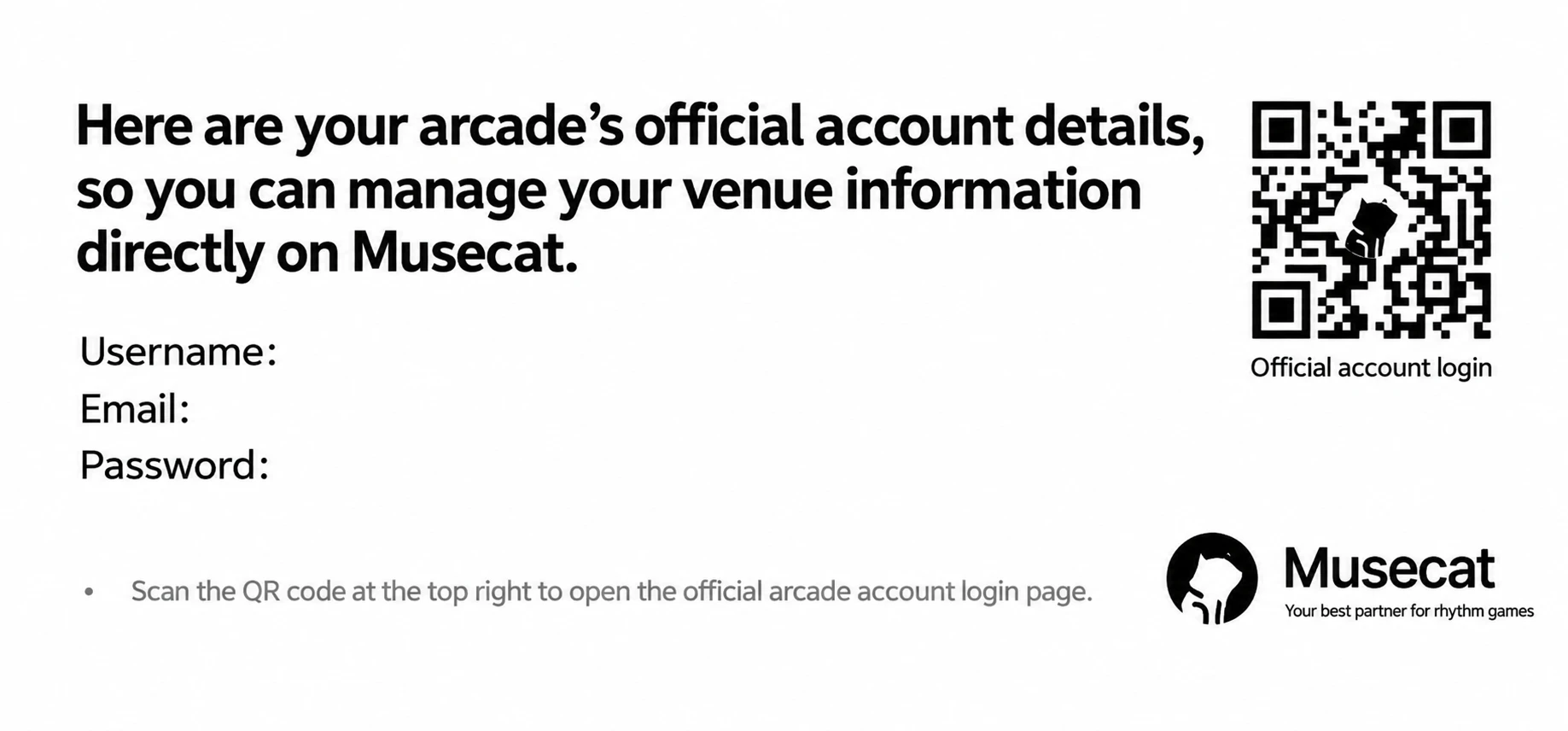
I wanted to explain the purpose and intent of the project a little more clearly, rather than simply hand over the posters.
Since I live in Busan, I also hoped to continue the poster project in Busan and the Honam region if possible. With my military enlistment approaching, though, I will have to decide based on my schedule and circumstances.
4. After delivering posters to 11 arcades
In the end, I was able to visit all 11 planned arcades and complete the poster deliveries without any major problems.
What left the strongest impression on me was the warm interest and cooperation shown by the arcade owners and staff. Although I was contacting them for the first time, most were very kind. Their understanding of the project and willingness to help made the experience even more meaningful.
Above all, I felt most proud to experience my designs moving beyond the screen and finding a place in real arcades.
By going beyond planning and design to handle printing, distribution, and conversations on site, I was reminded of how much work it takes before a design can actually be put to use.
It was also personally very meaningful to visit arcades I had often enjoyed as a rhythm game player, this time as a designer rather than a customer.